
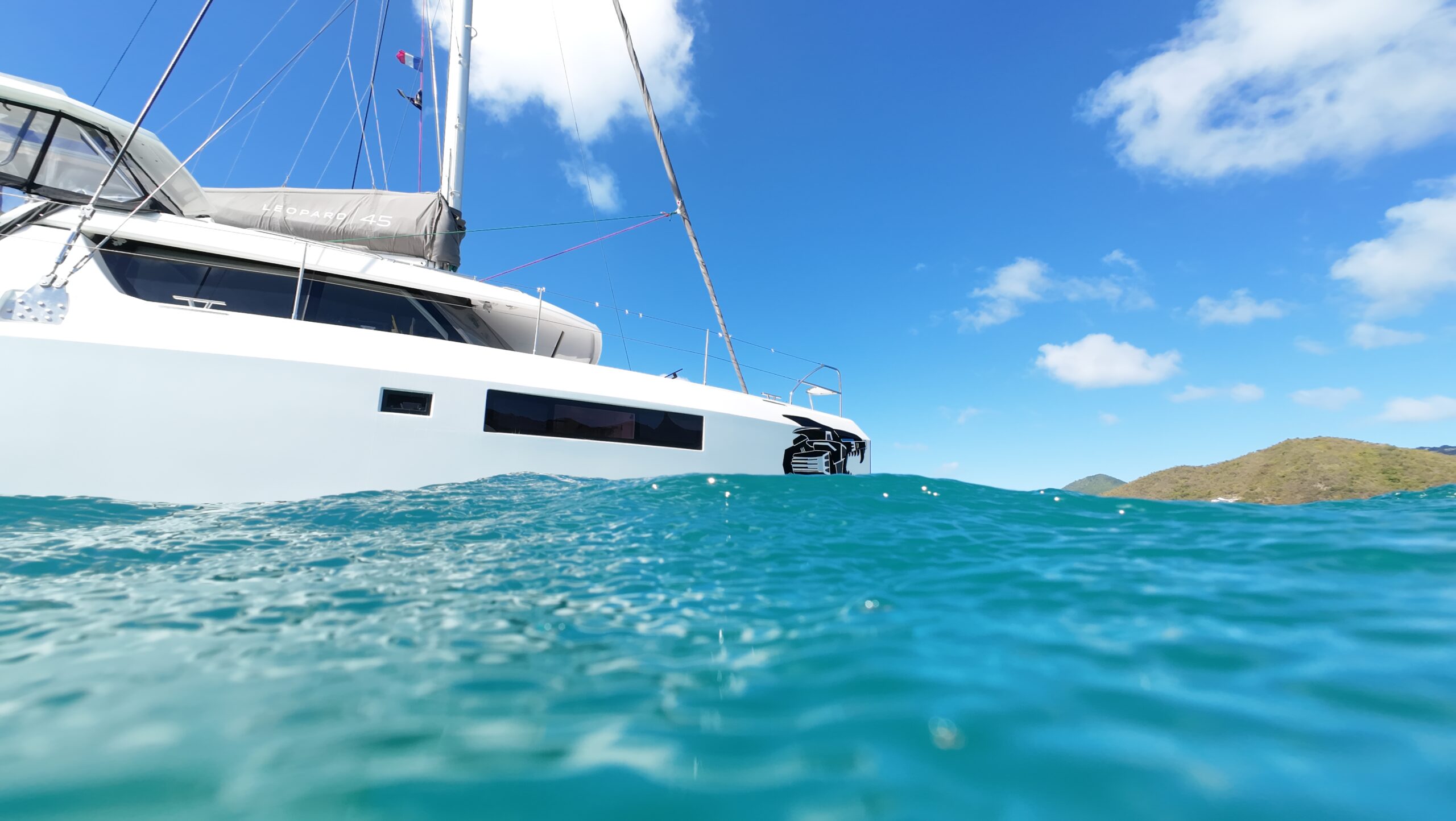
When it comes to outfitting a sailboat for long-term cruising, a proper marine sewing machine is something many cruisers consider.
While I already had a Brother home machine, I knew right out of the gate that it could never handle thick sail repairs or heavy canvas projects. Having done extensive research as part of preparing for liveaboard life, I decided to take the plunge early, which led me to buy the Sailrite Ultrafeed LSZ-1.
What is the Sailrite Ultrafeed LSZ?#
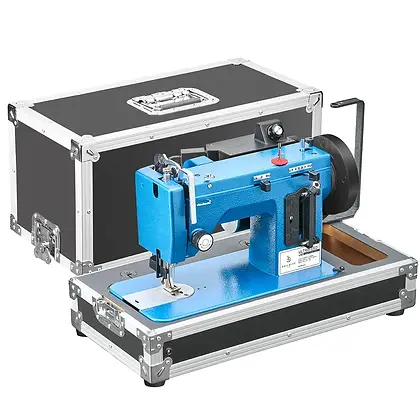
The Sailrite Ultrafeed LSZ is a heavy-duty, portable walking-foot sewing machine built specifically for sailors handling thick marine canvas and sail repairs.
- Stitch type: Straight stitch and zig-zag
- Power: Available in 110V new, or 220-240V second-hand
- Mechanism: Walking foot for thick material feeding
- Portability: Comes with a sturdy wooden base or integrated into a carry case
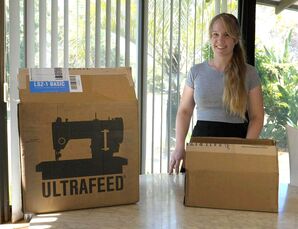
I bought my Sailrite in 2020, opting for the 220-240V Basic package to match SV Liger’s Australian electrical system. Since then Sailrite have streamlined into a single product offering, made the upgraded WorkerB Power Pack motor the standard, and currently only have the 110V version for sale.
Why I bought the Sailrite Ultrafeed LSZ#
I purchased the Sailrite Ultrafeed LSZ because the standard Brother home sewing machine I had just couldn’t handle the thick canvas and heavy-duty materials required for bigger boat projects. Before investing in the Sailrite I already knew the basics of sewing, but stitching multiple layers of Sunbrella or nylon would have stalled out my lighter machine, or started snapping needles or damaging components.
Taking the plunge wasn’t cheap. Not only was there the cost of the machine and upgrades, but I also had to pay for shipping to Australia and some import taxes. Ultimately though, I felt the price was justified by the brand’s reputation for longevity and quality.
Along with the machine I also ordered some extra equipment and spare parts.
Equipment:
- Monster II Balance Wheel (Came with a spare 18.6″ Cogged Timing Belt)
- Cording Foot Set
- Left Roping Zipper Foot
- 1″ Swing-Away Binder
- Size 18, Size 20, Size 22 needles
- V-69 and V-92 Thread
Spares:
- Cogged Timing Belt 8″
- Retaining Ring Clips Set
- Thread Take-Up Spring
- Bobbin Case
- Scarfed Shuttle Hook
- Retaining Ring Cap Springs
To date, I’ve never had to install any of these spare parts, although 5 years in the original timing belt is starting to look a little worn, so that may get replaced with the spare in the next year or two.
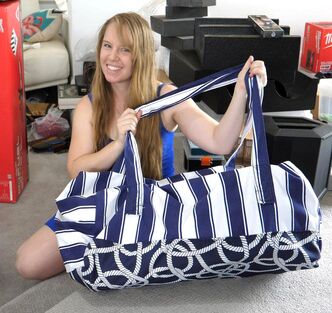
How it performed in real conditions#
Setting up the Sailrite Ultrafeed LSZ was surprisingly straightforward, thanks largely to their brilliant library of YouTube tutorials and the pictorial instruction manual. Most of the process is intuitive, but anytime I got stuck, a quick video or look at the book cleared things up immediately. One thing to keep in mind is that the machine is much, MUCH heavier than a domestic sewing machine, especially with the base, so you might need a hand moving it around.
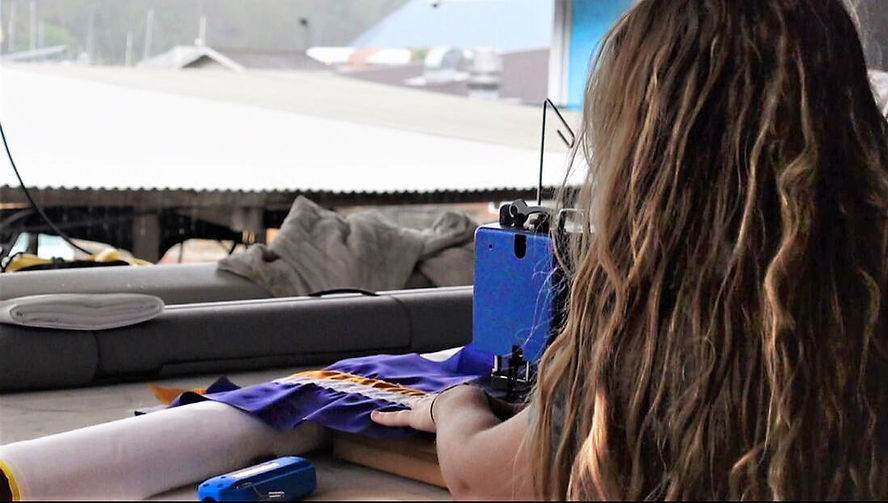
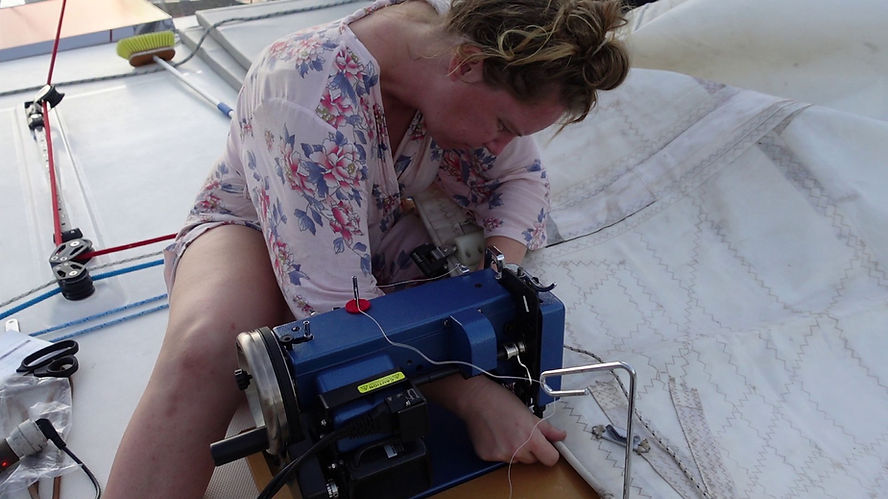
In terms of actual performance, my Sailrite sewing machine has had over five years of use without skipping a beat. I’ve thrown just about every boat material at it, stitching heavy-duty canvas, punching through rubber and neoprene, and making vinyl cushions and covers, all with no issues. The entire machine is heavy-duty and very mechanical in nature, so it has a more permanent feel than the largely plastic, heavily electronic, domestic machines.
Sewing neoprene proved to be one of the most frustrating challenges initially, as the material kept snapping my thread midway through a seam. After some trial and error, I discovered that switching to a Size 18 needle paired with V-69 thread solved the problem. Another learning curve was the Monster Wheel; it can build so much momentum when sewing quickly that it can sew two or three extra stitches after my foot leaves the pedal. This takes some getting used to, but I have no regrets getting the wheel as it allows me to sew with my Sailrite without power.
What I like about the Sailrite Ultrafeed LSZ#
What I like best about the Sailrite Ultrafeed LSZ is its reliable performance, paired with the durability and the easily accessible spare parts. In short:
- Heavy-duty construction that can last a lifetime if maintained
- Spare parts are affordable and easy to order directly from Sailrite
- The zig-zag stitch is a game changer for sealing and reinforcing, and I would recommend the Sailrite Ultrafeed LSZ over the Ultrafeed LS because of this
- The Monster Wheel provides impressive manual punching power; I fixed our mainsail just using the Monster Wheel
While there are cheaper heavy-duty machines out there, there really is something to be said for companies that make long-lasting, high-quality products, which they support with affordable, easily accessible spare parts and DIY tutorials. I also tend to order fabrics and thread from Sailrite, as I know I’m getting genuine materials, and it often works out to be cheaper and/or easier than trying to find it locally.
Frustrations or considerations#
If I had to pick a frustration with the Sailrite Ultrafeed, it would be the sheer weight of the machine. It’s heavy to move around, and when it builds momentum while sewing it can shake the whole table. That said, I don’t think this is a specific issue with the Sailrite Ultrafeed, but rather a general consideration for owning a heavy-duty sewing machine.
For potential buyers in Europe, Australia and New Zealand, be aware that Sailrite no longer make a 220V Ultrafeed. To overcome this, they recommend using a step down convertor, which is a workable solution that’s not unusual to see on a boat. The other option is to buy a 220V machine second-hand.
If you’re new to the whole idea of sewing on a boat and deciding whether you want a Sailrite is part of the starting point, take a look at my complete guide for getting started sewing on boats.
Useful accessories or upgrades#
In my opinion, the most useful upgrade for the Sailrite Ultrafeed LSZ is the Monster Balance Wheel, which came with a spare cogged timing belt. I haven’t used the 1″ swing-away binder, left roping zipper foot or cording foot set often, but when I do, it’s because I needed that specific function.
I absolutely would recommend stocking up on plenty of V-69 and V-92 thread, as well as a selection of spare needles in different gauges. For general tools, consider a seam ripper, sharp scissors, basting tape, Scribe-All pencil, right angle, rulers, extra bobbins (new Sailrite Ultrafeed’s come with 4), and a tape measure.
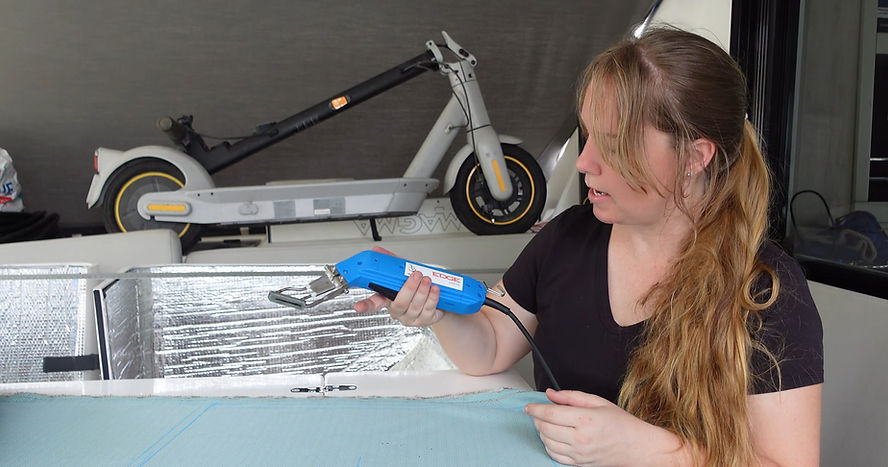
Finally, while not an attachment, buying the Sailrite Edge Hot Knife was the single best complimentary tool I purchased to make canvas work easier. At the start I went without one, but over time the need to have a hot knife grew until I eventually gave in and bought it, wishing I’d just done that earlier.
Is the Sailrite Ultrafeed LSZ worth the money?#
Based on my experience, I think the Sailrite Ultrafeed LSZ is absolutely worth the initial cost if you plan on doing a lot of repairs or custom canvas work on your boat. The savings you can make by sewing your own custom gear can cover the entire expense, not to mention the added benefits of being self-sufficient, and being able to make any little thing you think would improve life aboard.
I’ve also heard firsthand accounts of cruisers who paid off their machine just by taking on upholstery jobs for neighboring boats in the anchorage. If you already know how to sew, having this heavy-duty workhorse aboard can save money, time and frustration.
Final verdict and alternatives#
My final verdict is that the Sailrite Ultrafeed LSZ-1 is a worthwhile piece of equipment for long-term cruisers, vastly outperforming standard domestic machines on heavy fabrics.
If you only ever do light mending or clothing repairs, keeping a simple home sewing machine aboard is a viable alternative – I persoanlly have both. If you need a cheaper heavy-duty machine there are other brands out there, or you could look for a used Sailrite Ultrafeed.
Personally, I’m very satisfied with my choice to get a Sailrite, and I take comfort in knowing that if I look after it, it can outlast my time on the water and retain value even as it ages.
FAQ#
Can the Sailrite Ultrafeed LSZ sew through leather? #
Yes, the Sailrite LSZ is a walking foot machine designed specifically for thick, heavy materials like marine canvas, webbing, and even multiple layers of medium-weight leather. I’ve personally sewed through double layer leather; it felt like pushing through canvas.
What is the difference between the Sailrite LSZ and the LS? #
The Sailrite Ultrafeed LSZ can sew both straight and zig-zag stitches, whereas the Ultrafeed LS is a straight-stitch-only machine. The zig-zag capability is highly recommended for sail repair and reinforcing raw canvas edges, so is preferable for cruisers.
How heavy is the Sailrite Ultrafeed LSZ?#
The carrying weight of the Sailrite Ultrafeed LSZ is 55 lbs.
Disclosure: Telicia is a participant in the GoAffPro Affiliate Program, an affiliate advertising program designed to provide a means for sites to earn advertising fees by advertising and linking to Sailrite. This has not had any impact on the formation of this review, as honesty and transparency are core values of this blog.
One of the creators behind Travel Sketch, Telicia lives full-time aboard SV Liger. She’s a freelance writer who’s worked with a range of international companies, and serves as social media coordinator and magazine editor for noforeignland. With the Med and Caribbean done, she’s charting a course through the Pacific and Asia.



Leave a Reply