
Choosing health insurance as a cruiser is rarely straightforward. Most policies are designed for people who live in one country, or who travel for a clearly defined period of time. Cruisers don’t fit neatly into either category.
You might be moving between countries every few weeks, spending time offshore, applying for long-stay visas, or living aboard indefinitely with no fixed return date. That combination immediately rules out a lot of mainstream insurance options, even if they look good on paper.
Having done the research for our own cruising needs, this article shares what I’ve learned, breaking down some of the main health insurance options that cruisers commonly consider.
How health insurance options for cruisers generally break down#
Most sailor-friendly health insurance falls into three broad categories.
- International medical insurance is closest to traditional health insurance. It’s designed for people living abroad long term and usually offers the most comprehensive coverage.
- Travel insurance is designed for trips. It can work well for shorter cruising periods or defined itineraries, but less so for open-ended travel.
- Digital nomad insurance sits somewhere in between. These plans were built for people who want travel insurance but move constantly and don’t have a permanent base.
Understanding which category a provider falls into helps you set realistic expectations before you start comparing features and prices. The options we’re going to look at are:
| Genki | Nomad insurance |
| SafetyWing | Nomad insurance |
| Allianz Care | International medical insurance |
| AXA Global Healthcare | International medical insurance |
| IMG | International medical insurance |
| Cigna Global | International medical insurance |
| Topsail | Yachtsman travel insurance |
Pricing#
The pricing for international health insurance generally varies based on the plan benefits, your age, destination, optional extra’s, excess and any pre-existing conditions.
For many policies you have to specify a destination or country of residence, even though the policy covers a wider area. Being a transient yachtie this can be a hard question to answer, so check with the insurer how they’d like it to be handled. Which destination you select can impact the price, so bear this in mind.
To give you an idea of what international medical insurance costs, this is how the pricing compared at the time of writing for a 45 year old American, cruising in the Caribbean with the BVI’s set as their main destination.
| Insurer | Price | Excess & Limit | Coverage |
| Genki | Genki Traveler is 957 EUR annually (Around 1130 USD) | 50 EUR excess Max plan limit of 1,000,000 EUR | Worldwide (Limited USA and Canada) |
| SafetyWing | Complete Plan is 2511 USD annually | No excess Max plan limit of 1,500,000 USD | Worldwide (Excluding USA, Hong Kong, and Singapore) |
| Allianz Care | Care Basic Plan is 2611 USD annually | No excess Max plan limit of 5,000,000 USD | Worldwide (Excluding USA) |
| AXA Global Healthcare | Quote not available online for this search | ||
| IMG | Global Medical Bronze Plan is 2408 USD annually | 250 USD excess Max plan limit of 1,000,000 USD | Worldwide (Excluding USA, Canada, China, Hong Kong, Japan, Macau, Singapore, and Taiwan) |
| Cigna Global | Silver Plan is 3305 USD annually | No excess Max plan limit of 1,000,000 USD | Worldwide (Excluding USA) |
| Topsail | Quote not available online for this search |
Now let’s take a look at each provider and what they offer in more detail.
1. Genki#
Genki is an insurance provider focused offering coverage for long-term travelers and remote workers, and they’re who I’ve been using for the past few years. Currently, there are two plans:
Genki Traveler is designed to provide health cover for travel up to 12 months, while Genki Native is an annual policy that offers worldwide health insurance including things like dental and vision. Both plans come with cover for:
- Medical treatment and hospitalization
- Ambulance transport
- Medical repatriation
As with all insurance plans, it’s important to understand where coverage starts and stops, particularly around routine care, pre-existing conditions, and evacuation limits. I delve more into this is my review of Genki’s policies.
2. SafetyWing#
SafetyWing is a digital nomad insurance provider, designed for people who move frequently and don’t have a fixed home base. For cruisers, this type of policy is often attractive because of its flexibility. Policies can usually be started, paused, or cancelled easily, and coverage tends to follow you across borders without needing constant updates.
Currently, SafetyWing have two policies:
- Essential
- Complete
The Essential policy is more akin to travel insurance, while Complete is similar to international medical insurance. With Complete, you get coverage for:
- Medical treatment and hospitalization
- Evacuation
- Lost luggage
- Motor accidents
While this type of policy may not be suitable for remote areas, it may work if you’re cruising in largely coastal destinations that are well populated, like the Caribbean or Mediterranean.
3. Allianz Care#
Allianz Care is an international health insurance provider offering comprehensive medical cover for people living abroad. They have policies for 3-12 months and 12+ months, with three different tiers.
- Care Signature International Health Insurance
- Care Enhance International Health Insurance
- Care Basic International Health Insurance
Coverage varies between the tiers, and can be customized depending on your destination, what excess you want and your needs, for example if you want to add out-patient coverage. At it’s core though, all three have coverage for expenses like:
- Surgical, physician and therapist fees for in-patient and day-care
- Prescription drugs, materials, CT for in-patient and day-care
- Local ambulance
- Medical evacuation and repatriation
Allianz Care policies also include additional health services such as the Expat Assistance Program, Olive Health and Wellness Program, Digital Health App and the Second Medical Assistance Program.
4. AXA Global Healthcare#
With AXA Global Healthcare you get full international medical insurance, with over 80% of complete claims being paid within 48 hours. They have five tiers of coverage:
- Foundation
- Standard
- Comprehensive
- Prestige
- Prestige Plus
The difference between tiers is largely the annual plan limit and additional services like out-patient treatment (optional or included), chronic conditions, glasses, pregnancy and annual health checks. For all plans, there are benefits for:
- Hospital charges and surgery
- Emergency cover
- Ambulance
- Medical evacuation and repatriation
AXA also offers services to get a second medical opinion or to see a virtual doctor for medical or psychiatric care.
5. IMG International Health Insurance#
Among other insurance plans, IMG offers annually renewable international health insurance. Designed for expats and digital nomads, there are four tiers of coverage.
- Global Medical Bronze
- Global Medical Silver
- Global Medical Gold
- Global Medical Platinum
The Silver, Gold and Platinum plans all have optional add-ons, including Terrorism Protection, Sports Protection, Device Protection, and Dental & Vision. All plans include some level of benefits for:
- Medical care
- Urgent care
- Dental
- Medical evacuation
As a cruiser, it’s worth noting that only the Gold and Platinum plans support telehealth coverage.
6. Cigna Global#
Cigna Global is one of the most well-known providers of international medical insurance. For cruisers, they are often considered when long-term or indefinite cruising is the plan. Cigna’s insurance coverage has three levels:
- Silver
- Gold
- Platinum
Coverage is comprehensive, with options for inpatient, outpatient, evacuation, and additional benefits depending on the policy tier. All tiers include coverage for:
- Hospital charges and surgery
- Emergency cover
- Local air and ambulance
- Rehabilitation costs
Cigna Global is an insurance we held for a while, only changing when digital nomad insurance made more sense for our circumstances (more on that soon). While we never made a claim, the access to telehealth doctors definitely came in handy and it met the visa conditions for long-stay EU visas.
7. Topsail Yachtsman’s Travel Insurance#
Topsail Insurance is often discussed within the cruising community because it markets specifically to sailors and liveaboards. For health, their policies are more akin to travel insurance, than international medical insurance, with the coverage being more limited.
- One-Off Single Trip Policy – For 1 voyage
- Multi-Trip Annual Policy Gold – Covers up to 12 months away
One of the biggest limitations with this policy, aside from what’s in the PDS, is the eligible nationalities. Only people who are a resident of the UK, Bahamas, Barbados, Bermuda, BVI, Falklands Islands, Gibraltar, Guernsey, Hong Kong, Isle of Man, Israel, Jersey, New Zealand, Singapore, South Africa, Trinidad & Tobago and Turks & Caicos.
Having residential limits is not uncommon with travel insurance, another reason why it’s not always as suitable for full-time liveaboard cruisers as international medical insurance.
Read the conditions!#
As a cruiser it’s important to understand how the insurance companies process claims from full-time sailors. For example, do they accept that you will be moving nomadically, and how is the coverage impacted by sailing or being offshore. As an example, some policy documents have this exclusion:
You are not covered for emergency evacuation or repatriation if any of the following apply: the evacuation would involve moving you from a ship, oil-rig platform or similar off- shore location
While that exclusion may not be a deal breaker, conditions like this are very important to be aware of.
Choosing the right health insurance as a cruiser#
There is no single best health insurance option for cruisers, rather the right choice depends on how long you plan to cruise, where you’ll be sailing, your health history, your budget, and how much administrative complexity you’re willing to deal with.
International medical insurance offers the most complete protection, but at a higher cost. Travel insurance can work for defined trips, but struggles with long-term cruising. Digital nomad insurance fills an important gap, offering flexibility for people who don’t fit traditional models.
The most important step is matching the insurance to your actual lifestyle, not the one you think you might have. Reading the PDS, understanding exclusions, and revisiting your coverage as plans evolve matters far more than choosing a popular provider.
The goal isn’t perfection. It’s informed choice. Taking the time to understand these options now can save stress, money, and difficult decisions later.
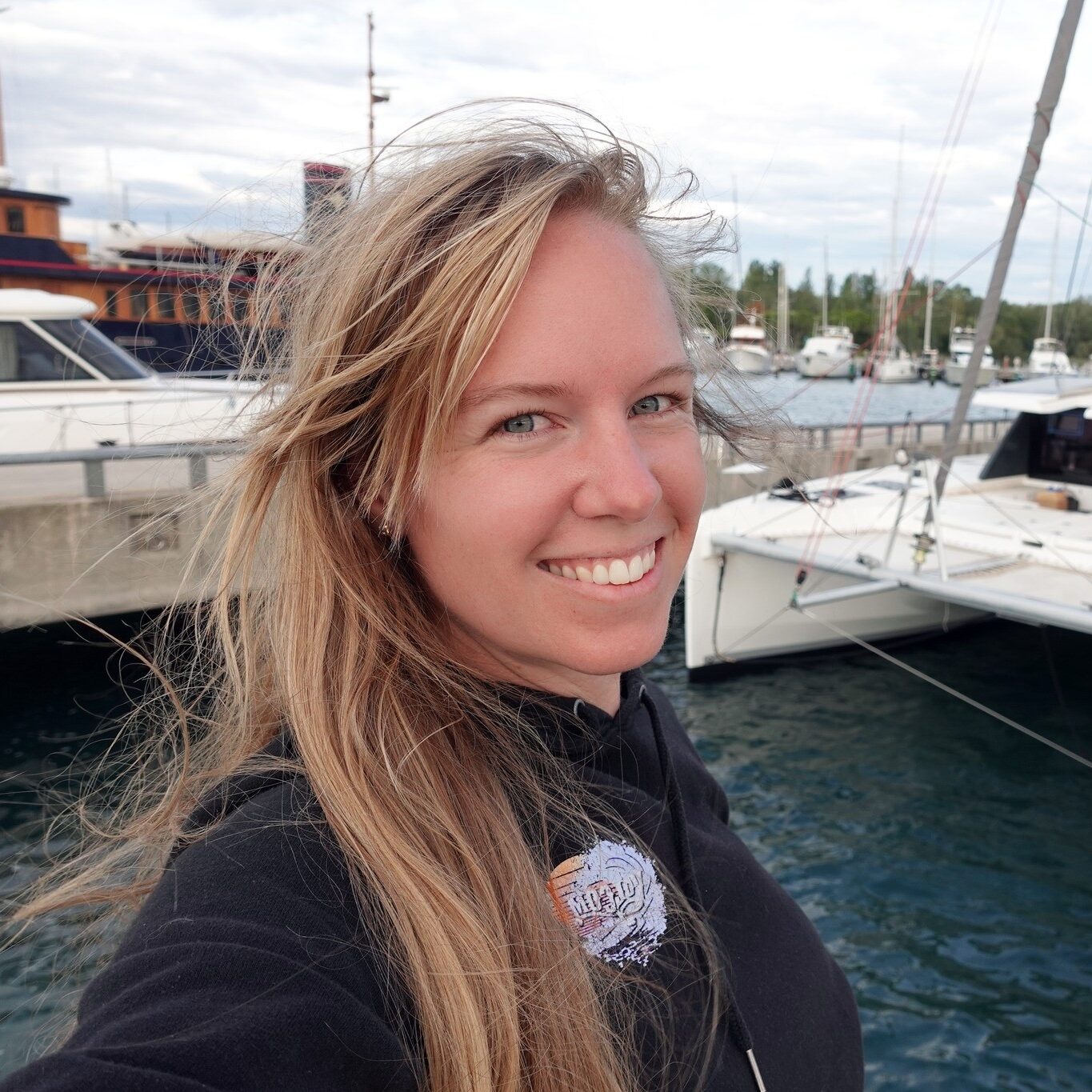
One of the creators behind Travel Sketch, Telicia lives full-time aboard SV Liger. She’s a freelance writer who’s worked with a range of international companies, and serves as social media coordinator and magazine editor for noforeignland. With the Med and Caribbean done, she’s charting a course through the Pacific and Asia.



Leave a Reply