
For modern liveaboard cruisers, electricity is essential. It affects where you can anchor, how long you can stay, how comfortable life is, and how independent you really are. The right setup gives you flexibility. The wrong one quietly limits your cruising plans.
To give you an insight into liveaboard life, this is how cruisers like myself actually use power in our day to day lives. We’ll explore how lifestyle choices change energy needs, and the main ways electricity is generated on a cruising boat. The goal is to help you understand the trade-offs so you can make decisions that suit how you want to live aboard.
How much power liveaboards really use#
There’s no single answer to how much power a liveaboard boat uses; two boats sitting side by side in the same anchorage can have wildly different power demands, even if they’re the same model.
At a basic level, most boats draw power for refrigeration, lighting, navigation electronics, pumps, and charging devices. That baseline is relatively modest, manageable with even a simple setup. The moment you start adding comfort or convenience, power usage climbs.
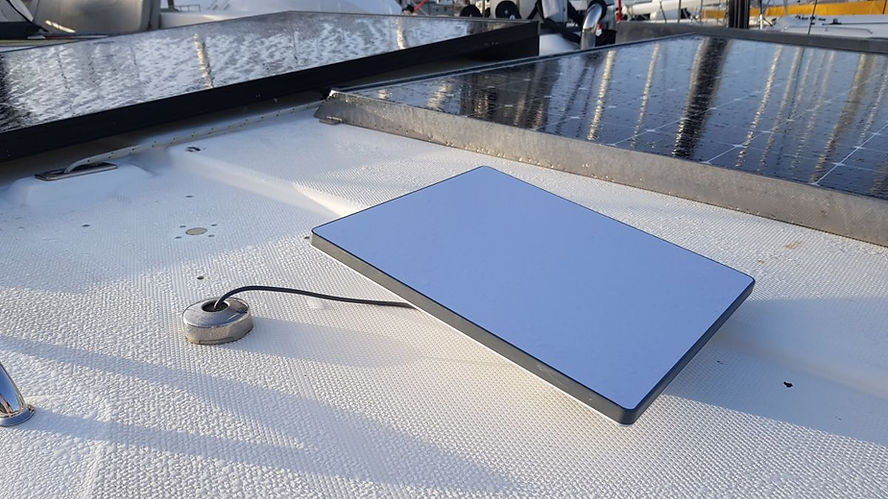
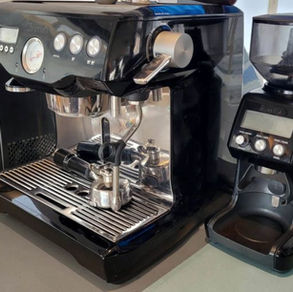
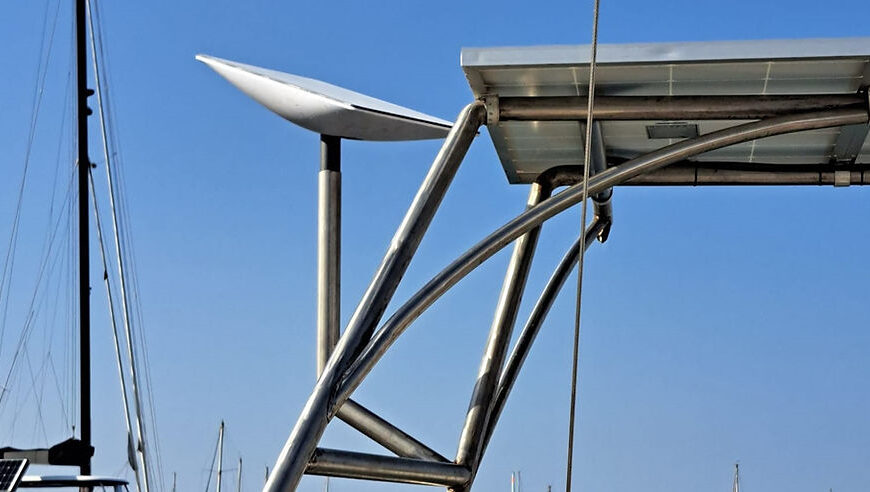
On a modern liveaboard boat, it’s common to see energy going towards laptops, Starlink, watermakers, occasional air conditioning, cooking appliances like air fryers or induction stoves, and washing machines. None of these are unreasonable on their own. Combined, they start to shape the entire electrical system.
How lifestyle affects power needs#
Lifestyle is the single biggest driver of electrical design on a liveaboard boat. A couple who sails occasionally, spends most evenings reading, and eats simply will have very different needs from someone living and working remotely full time, or a liveaboard family with teenagers.
Lifestyle choices that impact electrical consumption include:
- Amount of time spent living on the boat
- Cooking with electrical appliances versus gas
- Air conditioning and electric heating
- Electric hot water units
- Washing machine
- Watermaker
- Lithium battery devices like e-scooters that need charging
- Electric outboard motor charging
- Laptop and tablet charging
- Internet power consumption
- Refrigeration and freezers
- Navigation systems including autopilot, MFD’s and sailing instruments
There’s no “correct” amount of power. It’s simply a case of assessing how much power you use in “normal” liveaboard life, and what you can generate. For us, we use power tools, have many electronic devices and appliances including a washing machine and watermaker, and like hot showers, so a robust electrical system was needed to maintain this lifestyle.
Different ways to generate power on a cruising boat#
Most liveaboard boats rely on a mix of power generation methods rather than a single source. Each has strengths and limitations, so cruisers tend to combine them to ensure coverage in different conditions.
Solar#
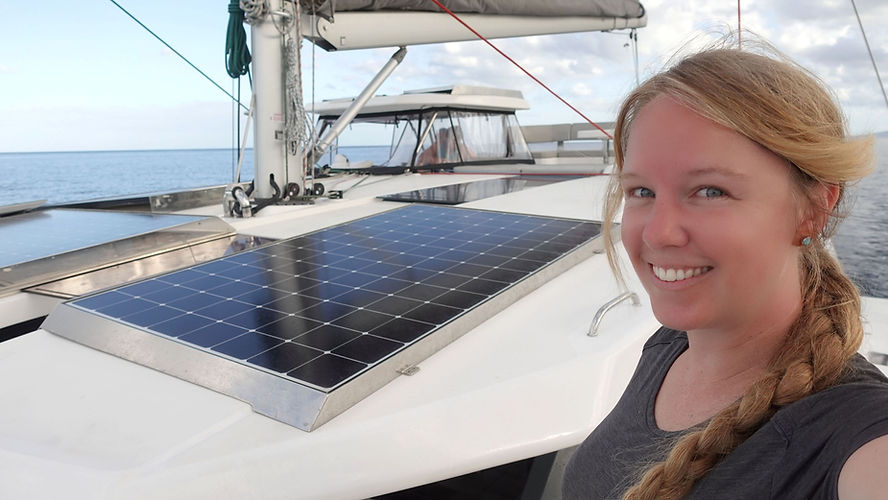
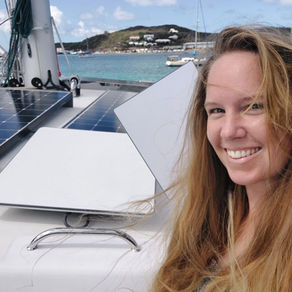
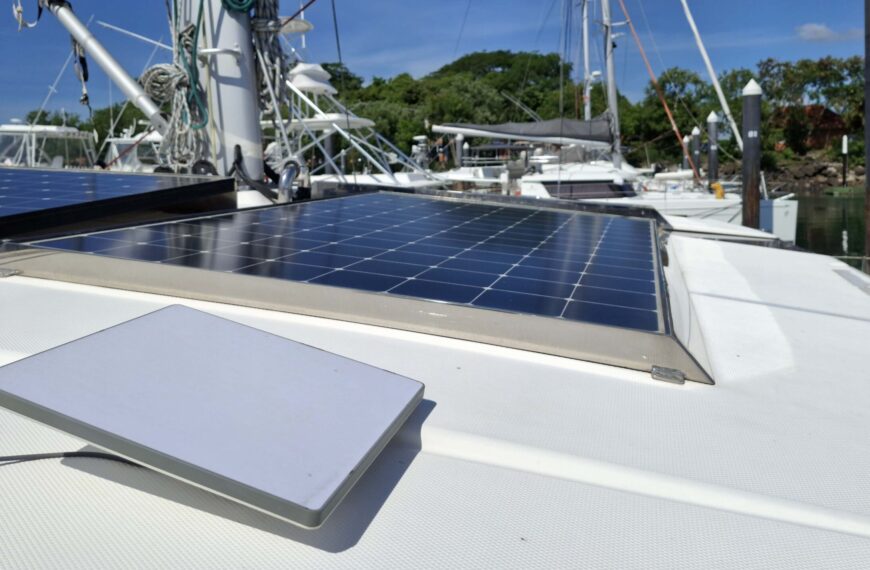
Solar power has become the backbone of many modern cruising electrical systems, including ours. Panels are silent, low maintenance, and produce power whenever the sun cooperates. For boats that spend long periods at anchor, solar often provides the bulk of daily energy needs.
The limitation is consistency. Solar output depends on latitude, season, weather, and panel placement. Multiple overcast days in a row can significantly reduce generation, even on boats like our that have large arrays. It doesn’t mean solar is unreliable, just that it works best as part of a broader system.
Wind#
Wind generators appeal more to cruisers who sail in breezy regions. When conditions are right, they can produce power day and night, which helps balance solar’s daytime bias. They’re also more compact, helpful monohulls where there is less real-estate to install solar panels.
Some cruisers find winder generators invaluable, others find them noisy, underwhelming, or poorly matched to their cruising grounds. It’s a system that tends to work best when cruising patterns and anchorages support it, rather than being installed by default.
Alternators#
Engines remain a significant source of electrical generation on many boats. Alternators can charge batteries quickly, especially when paired with modern charging equipment.
The downside is that charging batteries by running engines purely for power adds engine hours and fuel consumption. For some cruisers, that’s acceptable. For others, it’s something that’s only used when already underway.
Shore power#
Access to shore power comes and goes, so most liveaboard systems are designed to function independently, with shore power acting as a bonus rather than a foundation. In assessing your shore power, it’s important to be aware that poor shore power setups can damage onboard equipment if protection isn’t adequate.
Generators#
Generators are often the most debated part of a cruising power system. They add cost, complexity, and maintenance, but they also provide a level of independence that’s hard to match.
For boats that want to remain fully off-grid during periods of poor weather or high demand, a generator can bridge the gap without relying on engines. It’s why we installed one; used thoughtfully, it becomes a tool rather than a crutch.
Why no two boats have the same power setup#
It’s tempting to look at another boat’s system and assume it’s a template, ready to copy. In reality, electrical setups are shaped by budget, cruising plans, climate, and personal tolerance for compromise.
Some cruisers optimise their system for silence and simplicity. Others prioritise redundancy and maximum comfort. Some accept running engines occasionally. Others design systems specifically to avoid it.
Even boats with similar equipment can behave very differently depending on how they’re used. That’s why copying a setup without understanding the reasoning behind it often leads to frustration.
The most successful electrical systems are the ones designed around real behaviour, not aspirational usage. They evolve over time, adapt to changing plans and reflect the reality of life aboard, rather than an idealised version of it.
One of the creators behind Travel Sketch, Telicia lives full-time aboard SV Liger. She’s a freelance writer who’s worked with a range of international companies, and serves as social media coordinator and magazine editor for noforeignland. With the Med and Caribbean done, she’s charting a course through the Pacific and Asia.


Leave a Reply