
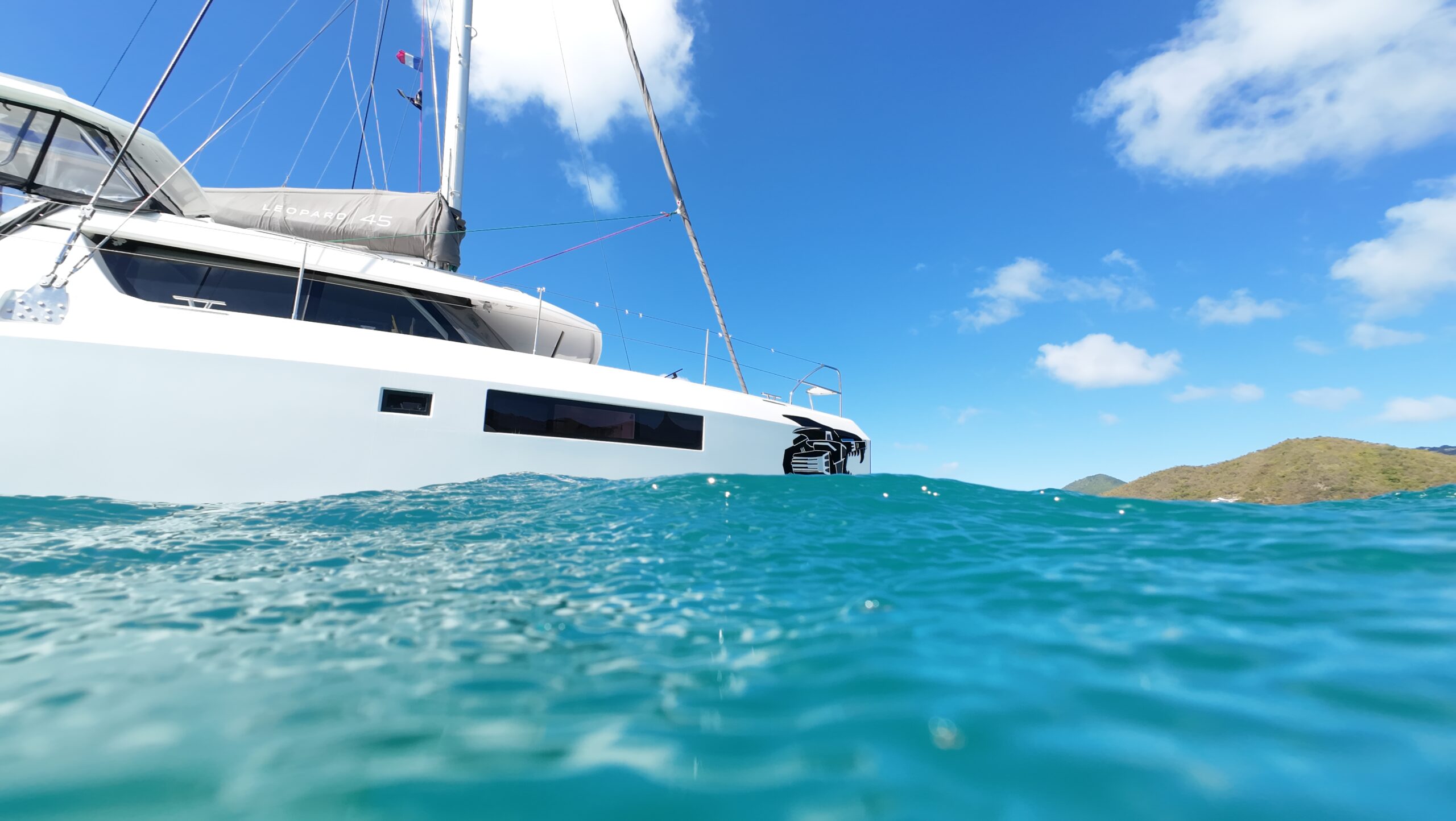
We all know the marine environment is harsh. The salt, the sun, the moisture, and heat, all have an impact on your gear, and your canvas projects are no different.
When you spend hundreds of dollars on quality marine fabric, like Sunbrella or Weathermax, you do it because you know it’ll last. But don’t be tempted to skimp on the thread. Normal thread will fail at sea, so let’s explore why that is, and what specific products will actually survive the elements.
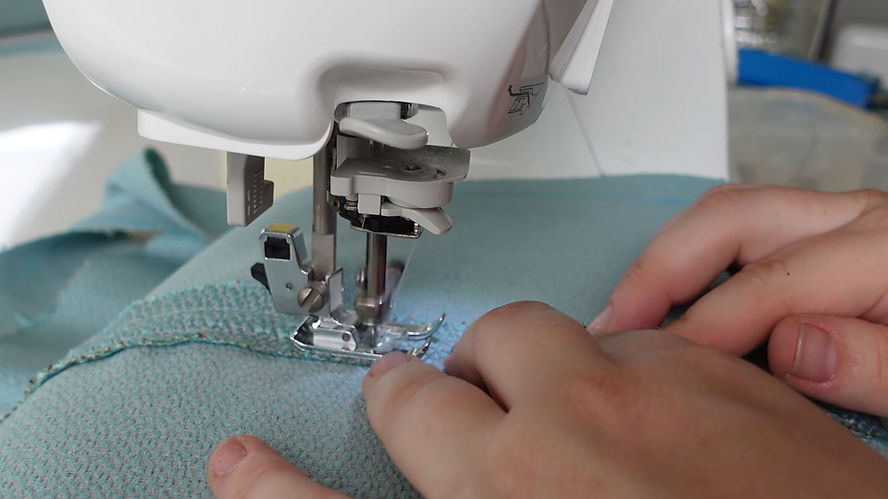
Why standard thread rapidly disintegrates at sea
Standard sewing thread disintegrates quickly at sea because it cannot handle the relentless assault of UV radiation and mechanical wear.
Anyone who’s been aboard a boat for a while knows that UV rapidly destroys any inappropriate materials that are left outside. When normal cotton or polyester thread is exposed to a combination of intense sun, saltwater spray, humidity and high winds, it can rip and fall apart in weeks, leaving you to restitch, repair or even replace the thing you’ve just made.
The point is, why do the work twice, when it can easily be done perfectly the first time using a better quality, more appropriate thread?
V-69 Polyester vs. PTFE Thread
Choosing the right marine thread usually comes down to two choices:
- Bonded polyester like V-69
- Lifetime PTFE threads
Bonded polyester thread, like V-69 or V-92, is considered the standard choice for everyday marine canvas work. It’s relatively affordable (especially when you can get it on sale), comes in massive cones, and generally lasts about three to five years before the UV finally breaks it down.
Lifetime PTFE thread, like Tenara or Profilen, is the lifetime upgrade – it will outlast the Sunbrella fabric itself. However, PTFE is much more expensive, very slippery, and notoriously difficult to sew with if your sewing machine isn’t perfectly dialed in.
Personally, I prefer using bonded polyester because it’s strong, reliable, and easier to use. I keep it aboard in white, black, and charcoal grey (Matches the Sunbrella color pack our boat came with).
Here’s an idea of the price difference between the two, at the time of writing
| Bonded Polyester | PTFE |
| PremoBond Tex 90 thread (4 oz / 1350 yards)14.95 USD | Sailrite Tex 92 thread (8 oz / 1595 yards)140.85 USD |
| SunstopTex 90 thread (4 oz / 1350 yards)14.95 USD – 18.95 USD | TenaraTex 92 thread (8 oz / 1595 yards) 163.95 USD – 166.95 USD |
The difference between Tex and V thread
When you go to buy bonded polyester thread you will see different types, for example V-69, and Tex 70. These descriptors are telling you what thickness the thread is.
Since you will see both while shopping, here’s a conversion chart between Tex and V sizing for polyester thread.
| Tex | V |
| Tex 16 | V-15 |
| Tex 30 | V-30 |
| Tex 45 | V-46 |
| Tex 70 | V-69 |
| Tex 90 | V-92 |
| Tex 135 | V-138 |
The difference between V-69 and V-92
For most marine canvas and sailmaker sewing projects you’ll be using V-69 or V-92, which is Tex 70 or Tex 90.
Understanding the difference between V-69 and V-92 thread is crucial for matching the thread strength to your specific fabric weight.
V-69 is a thinner, incredibly versatile thread that’s great for sewing marine canvas, doing marine vinyl upholstery, and constructing lighter protective covers.
V-92 is thicker and stronger. It’s the preferred choice for projects that need reinforcement, like sail repairs, making offshore dodgers or helm enclosures, and sewing highly stressed webbing straps.
The best UV thread for you project will depend on skill, machine, budget and your preferences. Personally, I prefer using bonded polyester because it’s strong, reliable, and easier to use. I keep it aboard in white, black, and charcoal grey (Matches the Sunbrella color pack our boat came with).
Where to buy marine sewing supplies
To buy UV rated thread, you have a couple of options:
- Go to the local marine canvas or upholstery fabric supplier
- Check with a sailmaker or canvas shop
- Buy it online
If you’re buying online, make sure you’re using a reputable dealer to ensure you’re not getting fake or substandard thread. My go-to is Sailrite as they ship world-wide and I know what they have is the real deal – over the past 5+ years the amount of UV bonded thread I’ve bought and used from them could be measured in miles rather than yards!
Matching your needle and thread size
Matching your needle size to the thickness of your thread is something you need to do for heavy-duty marine sewing. If you try jamming thick V-69 thread through a standard home sewing needle, you can experience skipped stitches, shredded thread, and broken needles. The eye of the needle must be large enough to allow the thick thread to pass through smoothly without excess friction.
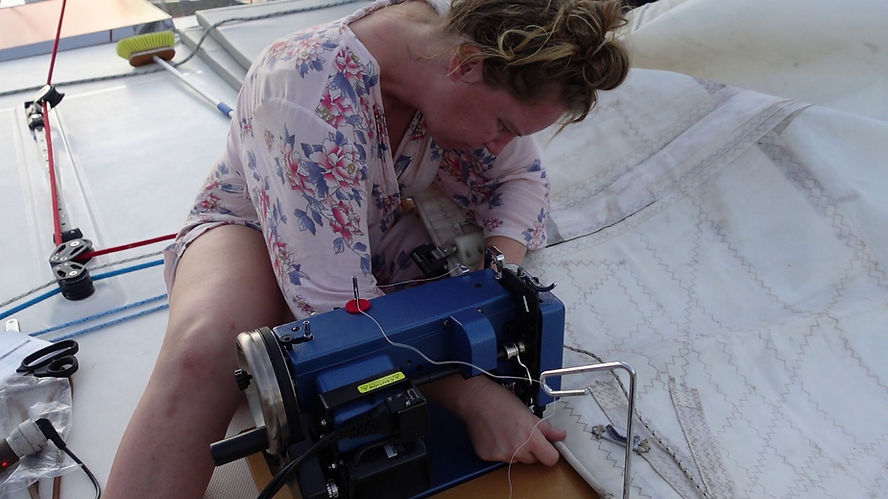
It’s rare that I would use bonded polyester thread in my home sewing machine, and when I do it’s usually something thinner like Tex 30 or Tex 45. Instead I use my Sailrite LSZ, which is a heavy-duty, walking foot sewing machine that’s designed for DIY projects. Depending on the thread thickness I change out the needle, which takes one twist of a screw, and always do a quick test line to check that my machine’s tension settings are perfectly suited to the thread and fabric combination I’m sewing.
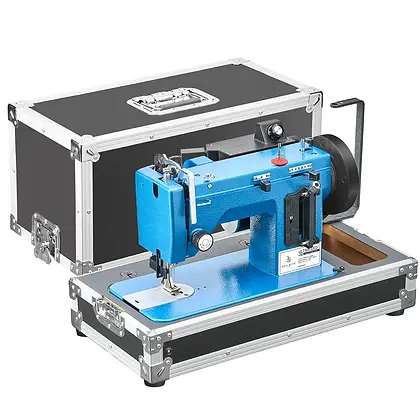
After 5+ years of ownership read my complete Sailrite LSZ review here
Tips for storage
Properly storing your cones of marine thread is an often-overlooked aspect, but it’s important to consider.
The best practical tip for preserving your thread is to store it in a cool, dry area of the boat. I keep mine stashed in a cupboard down in the port forward cabin, and have never had a problem. Throwing a few desiccant packets into your thread storage box is another easy way to keep moisture at bay.
Add UV thread to your marine sewing kit
At the end of the day, the thread you choose dictates the functional lifespan of your DIY marine canvas projects. You can sew the most beautiful, perfectly patterned winch cover in the world, but if the seams rot away in six months, it’s completely useless.
For liveaboard cruisers and recreational boaters, understanding the limits of your materials and choosing UV-resistant products, like UV bonded polyester thread or PTFE sail thread, is the smart move.
FAQ
What is UV thread?
UV thread is simply thread that is resistant to the impact of UV, meaning it can handle long periods of exposure without breaking down.
Is polyester thread UV resistant?
Some polyester thread is UV resistant, some isn’t. If it’s for an outdoor project you want to specifically look for UV bonded polyester thread.
Is bonded nylon thread UV resistant?
While nylon can be treated with a UV resistant coating, the thread itself doesn’t have the inherent UV resistance that UV bonded polyester thread does. As such, you’re better to go with bonded polyester or PTFE for outdoor projects.
Disclosure: Telicia is a participant in the GoAffPro Affiliate Program, an affiliate advertising program designed to provide a means for sites to earn advertising fees by advertising and linking to Sailrite. This has not had any impact on the formation of this review, as honesty and transparency are core values of this blog.
One of the creators behind Travel Sketch, Telicia lives full-time aboard SV Liger. She’s a freelance writer who’s worked with a range of international companies, and serves as social media coordinator and magazine editor for noforeignland. With the Med and Caribbean done, she’s charting a course through the Pacific and Asia.



Leave a Reply