
Learning to sew on your own boat isn’t just a handy skill, it’s one of the most valuable investments you can make as a cruiser. Whether it’s a ripped sail in the Pacific, a broken cover in the Caribbean, or the desire for some new cushions, knowing how to fix and make things yourself saves money, stress, and keeps your cruising plans on track.
This “marine sewing for beginners” guide goes through everything there is to know about getting started sewing on boats, including why do it, what you can make, and the tools you need. It comes from someone who gets it – a full-time liveaboard cruiser myself, I understand what life on the water is like, and know first-hand just how beneficial it is being able to sew on a yacht.
Why sewing on a boat is a valuable skill to learn#
Marine canvas has a hard life. Sun, salt, wind, and spray are relentless, and no fabric lasts forever. Paying for professional repairs can add up quickly, especially as the majority of the cost tends to be labor, rather than materials. When you do it yourself, these projects automatically become more budget friendly.
For me, the other big part of it was self-sufficiency – things don’t break on schedule, and you might be miles from the nearest sail loft or marine upholsterer when it does. Learning to cut, stitch, and repair your own canvas lets you fix problems in the moment, whether it’s as simple as replacing a zipper, or as important as patching a torn bimini before it gets worse, or repairing a ripped sail so you can get back underway.
What you can actually sew on a sailboat#
When it comes to marine sewing, there’s a surprisingly wide range of projects you can tackle yourself. Knowing which items are realistic for your skill level helps you get started and improve your abilities, while also providing immediate benefits onboard.
Everyday marine canvas projects#
If you’re just starting out, it’s useful to take on some stand-alone projects that aren’t critical, but make for a nice little upgrade aboard. This could include:
- Winch covers
- Hatch covers
- Cushion covers
- Fender covers
- BBQ covers
- Storage bags
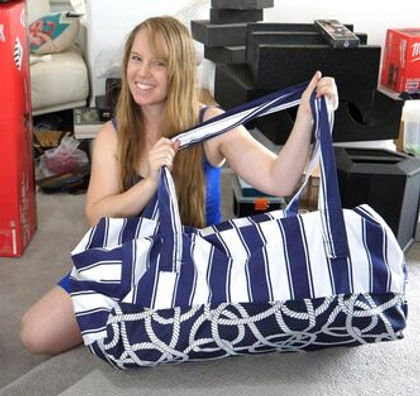
My very first project was making a duffle bag for scuba diving gear, followed by a BBQ cover.
Structural canvas projects#
Once you’re confident with basics, larger sewing projects become possible. Bigger marine canvas endeavors can include:
- Biminis
- Dodgers
- Helm enclosures
- Sunshades
- Helm seat bags
- Dinghy chaps
A great resource for learning canvas skills is the Sailrite YouTube channel, which has many DIY guides. Personally, my first foray into marine canvas was trying to make a new helm seat bag, which quickly proved the value of a hot knife and basting tape!
Repairs that matter offshore#
The skills you learn aren’t just for creating new gear, they’re for saving the day when things fail:
- Restitching seams after UV damage
- Replacing broken zippers on dodgers and enclosures
- Patching ripped canvas after a squall
- Adding patches to canvas that’s being worn through
- Repairing a sail
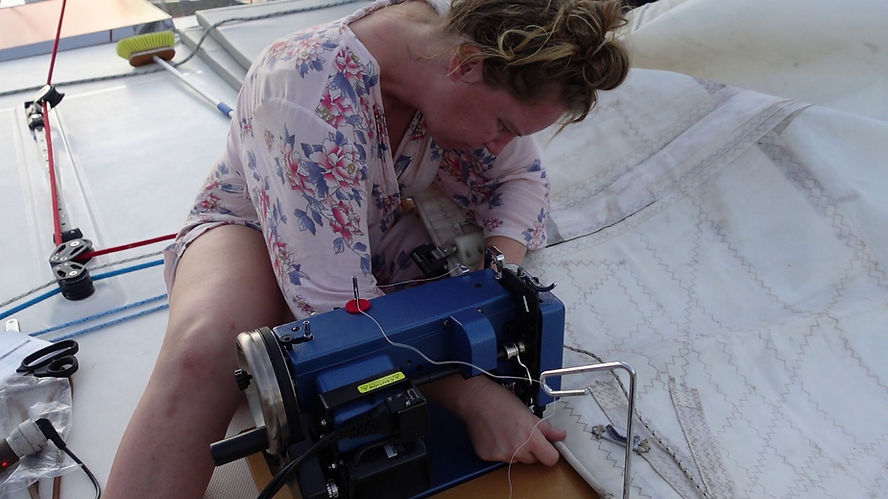
Essentially it’s about being able to do emergency fixes when professional help is miles away. For us, that was repairing the torn edge of a sail, when the alternative was trying to find a sailmaker in Trinidad in the period between Christmas and New Years.
Random boat sewing projects#
There are also those projects that you don’t really see coming until you have the skills to be able to do them. For me that list has included:
- Repairing holes in our dog’s Ruffwear backpack
- Making a new dive knife cover when the rubber on the original one tore
- Repairing countless holes in clothing
- Replacing all of the cushions in the saloon
- Making an extra padded seat for the tender
There is a true sense of accomplishment involved with being able to make things for your boat that better life for the people aboard, using your own skills and knowledge.
Is sewing on a boat actually worth it?#
This is the question most cruisers ask themselves before taking the plunge because yes, there’s an upfront investment needed for the machine, thread, tools, and materials. There’s also a learning curve and the time spent practicing. But the payoff? In my opinion, it’s immense.
Doing it yourself reduces costs drastically, and you gain flexibility, independence, and confidence offshore. You can decide when to fix something, without waiting for a marina or sailmaker appointment, and the skills compound over time; a simple winch cover today might turn into a fully custom cockpit enclosure tomorrow.
For most liveaboards, DIY canvas is a net positive. Time spent learning is time earned in freedom and reduced expense later.
Choosing the right sewing machine for marine canvas#
Let me preface this by saying I actually have two sewing machines on our boat, a domestic machine and a heavy-duty sewing machine, and each is good for certain tasks.
The home sewing machine is great for lighter jobs; clothes repairs, curtains, signal flags and cushion covers. But, it struggles with thicker fabrics like Sunbrella or neoprene, and snaps needles trying to pierce multiple layers.
A heavy duty sewing machine solves these issues with design and power.
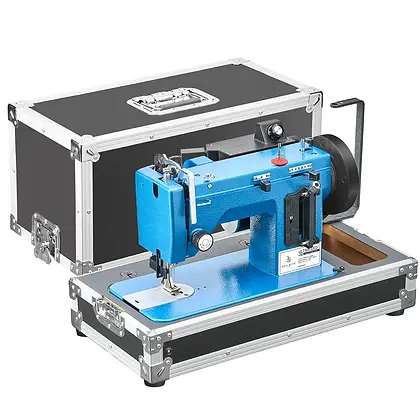
I have the Sailrite Ultrafeed LSZ, and it is a true workhorse. A walking foot sewing machine, it’s manufactured by Sailrite, a well-respected marine fabric and sewing machines shop. The momentum and power of the Sailrite LSZ can take a bit of getting used to, especially if you have the Monster Wheel like I do, but it tackles marine canvas like it’s nothing. The walking foot feeds heavy fabrics evenly and the motor penetrates multiple layers without stalling. The build quality handles salt, vibration, and constant use, and Sailrite sells replacement parts for a reasonable price.
If you’re considering getting a Sailrite, check out my full Sailrite sewing machine review.
Essential tools for sewing marine canvas#
Getting started with marine sewing requires a few key tools beyond the machine itself. Having the right equipment saves time, prevents frustration, and ensures your projects last.
Core tools you will actually use include:
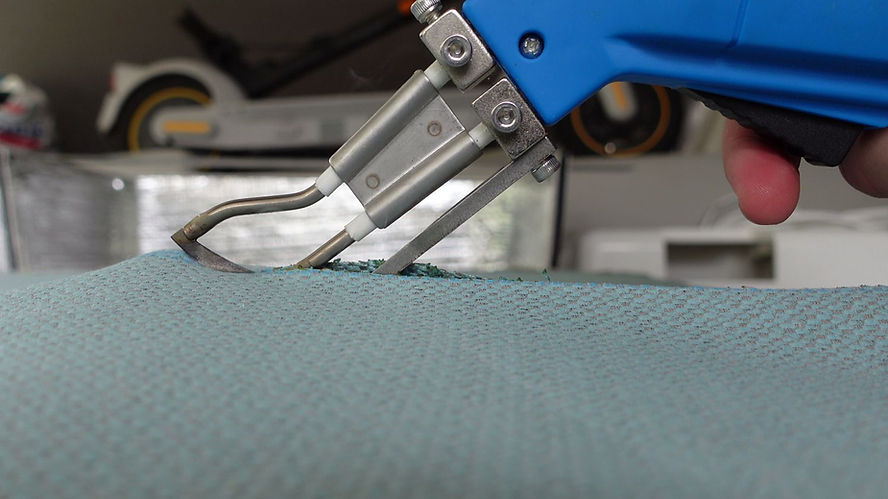
| Cutting tools | A hot knife cuts and seals edges in one go, preventing fraying. I tried going without one, lived to regret it, and now have the Sailrite Edge. Sharp scissors that make long, clean cuts are vital, just protect them from being used for other boat projects! A seam ripper is great for fixing mistakes and quickly cutting threads. I have big and small sizes aboard. |
| Basting tape | Double sided tape that holds canvas is easier and flatter than pins. I keep ¼ inch and ⅜ inch tape aboard |
| Marking tools | Tape measures, a long ruler, canvas ruler and right angle square can make marking shapes much easier. Grease pencils or chalk that won’t smudge in the marine environment are better for marking – my favorite are the Scribe-All brand. |
Past these tools, there are some supplies that make sense to keep aboard.
- UV-resistant thread like V-69 or V-92 Polyester, or PTFE lifetime thread
- Sail repair tape
- Extra needles and bobbins
- Sewing pins
- Hand sewing needles
- A few assorted clips and fixings that match what you have on the boat
Be aware that standard cotton or cheap polyester that’s exposed to sun and salt will degrade quickly, so matching the thread to your project ensures seams last as long as the canvas.
Workspace considerations onboard#
Working in a confined cockpit or saloon isn’t always easy, and you have to plan for wind, spray, and limited table space. Tools should be stored in a dedicated kit for easy access, and clamps or temporary weights can help hold material flat while sewing. With a little preparation, even tight spaces become workable for small or medium projects.
Understanding different types of marine fabrics#
Before starting a project, it’s important to understand the fabrics you’ll be working with. Knowing the characteristics, benefits, and limitations of the various marine materials helps you select the right choice for the job. This in turn helps ensure the longevity and functionality of what you create.
Let’s compare some of the main materials used for marine upholstery, canvas and sewing projects, as well as share some of the popular brands that make the products.
| Fabric Type | Uses Aboard | Common Brands |
| Acrylic fabric | Biminis, dodgers, cockpit enclosures, sail covers, winch covers, shade awnings, exterior cushions, upholstery | SunbrellaSattlerOutdura |
| Polyester fabric | Sail covers, stack packs, cockpit covers, lightweight biminis, shade awnings, dinghy chaps, upholstery | WeatherMaxShelter-RiteCrypton |
| Vinyl-coated fabrics | Heavy-duty sail covers, dinghy chaps, cockpit covers, stack packs, boom covers, areas that need abrasion resistance and waterproofing | StamoidTop Gun |
| Mesh | Flyscreens, cockpit shade panels, privacy screens, airflow panels in biminis or dodgers, storage pockets | PhifertexTextilineMosquito netting |
| Vinyl upholstery fabric | Interior cushions, cockpit cushions, helm seats, headlining panels, areas that need to be wipe-clean and waterproof | EverSoftMobernNaugahyde |
| Polycarbonate | Dodger windows, enclosure panels, sprayhood windows, cockpit enclosures | StrataglassPlastiplaneCrystal Clear |
Sourcing marine fabric#
Depending on where you are it may be tricky to source the fabric, especially if you want a specific brand and color. In general, there are three ways to go about it:
- Speak to a sailmaker or marine upholsterer to see if they have it
- Find the local importer or supplier for that fabric
- Buy it online and have it shipped in
Personally I’ve found the first option always comes at a premium, so I prefer to find the local supplier or importer, or have it shipped in.
My go-to to have sewing supplies shipped in is Sailrite. They carry a wide range of the fabrics I need (my savior for Sunbrella Marine Charcoal Grey!), and ship worldwide – so far I’ve received packages from them in Australia, the US and Trinidad & Tobago.
How hard is it to learn sewing on a boat?#
Learning to sew on a boat is not magic, but it’s also not trivial. Expect a few frustrating first projects with uneven seams and mistakes with measurement or fraying edges, but also a noticeable skill improvement over time.
Patience is key. I suggest using scrap fabric for practice and finding small projects to do that build your confidence, before tackling more expensive canvas endeavors. It’s also worth looking for how-to guides online or connecting with others in online communities if you get stuck.
The biggest mistakes people make with marine sewing#
Beginners often underestimate the learning curve and materials required. Common pitfalls include buying a home sewing machine instead of a heavy-duty one, using thread that degrades quickly, skipping proper tools, starting with complex curved projects too early, and poor measurement leading to wasted fabric. Avoiding these mistakes saves time, money, and frustration.
Looking back one of my biggest mistakes was thinking I could go without a hot knife. Many of the marine fabrics frayed more readily than I expected, making projects harder than they needed to be, and costing me time I didn’t need to waste.
When it makes sense to outsource instead#
DIY isn’t always the right call. Complex enclosures with intricate curves, large-scale projects requiring multiple windows and fasteners, or time-sensitive jobs where a professional can do it faster are situations where outsourcing is wise. A hybrid approach often works best; handle small to medium projects yourself and outsource only when absolutely necessary.
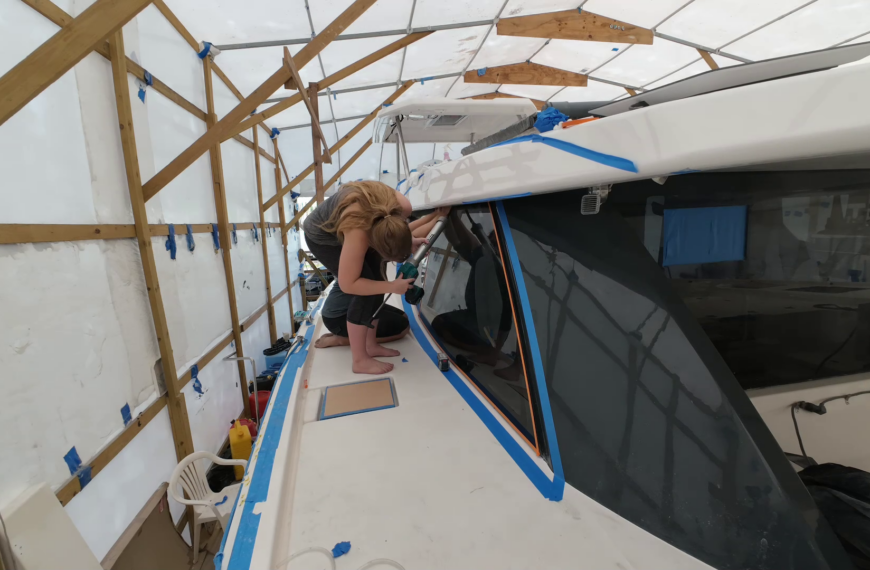
We outsourced the creation of our helm enclosure, as I did not have the skills to do that back at the start, but fast forward a few years and I replaced all of our interior cushions myself. The first time our sail needed repairing, we took it to the loft. I watched how they did it, and the next time there was a problem, I fixed it myself.
Sewing as a long-term cruising skill#
Mastering marine sewing isn’t just about saving money. It’s about confidence, independence, and freedom offshore. Each project you complete compounds your ability to handle bigger challenges in remote anchorages. From patching a torn bimini in a squall to crafting a custom cockpit cover, the benefits extend far beyond the sewing table.
FAQ#
What sewing machines are used by sail makers?#
Sailmakers use heavy-duty, high-stitch strength machines with long arms that can handle the thickness of sail reinforcements. The units are bigger and tougher than compact marine sewing machines, but it’s that size that makes them impractical for boat life.
Where can I buy marine sewing supplies?#
If you’re based in the US or Caribbean, one of the best shops for marine upholstery fabrics, fixings, sewing tools and UV rated thread is Sailrite. They have positioned their business to specialise in this, and having used them multiple times myself I find it to be the easiest, and often most cost effective way to get what I need to where I am. I’ve even used them to order fabrics to Australia, and despite shipping and taxes, the Sunbrella was still cheaper for me to get that way.
Telicia is a participant in the GoAffPro Affiliate Program, an affiliate advertising program designed to provide a means for sites to earn advertising fees by advertising and linking to Sailrite. This has not had any impact on the formation of this review, as honesty and transparency are core values of our blog.
One of the creators behind Travel Sketch, Telicia lives full-time aboard SV Liger. She’s a freelance writer who’s worked with a range of international companies, and serves as social media coordinator and magazine editor for noforeignland. With the Med and Caribbean done, she’s charting a course through the Pacific and Asia.


Leave a Reply