
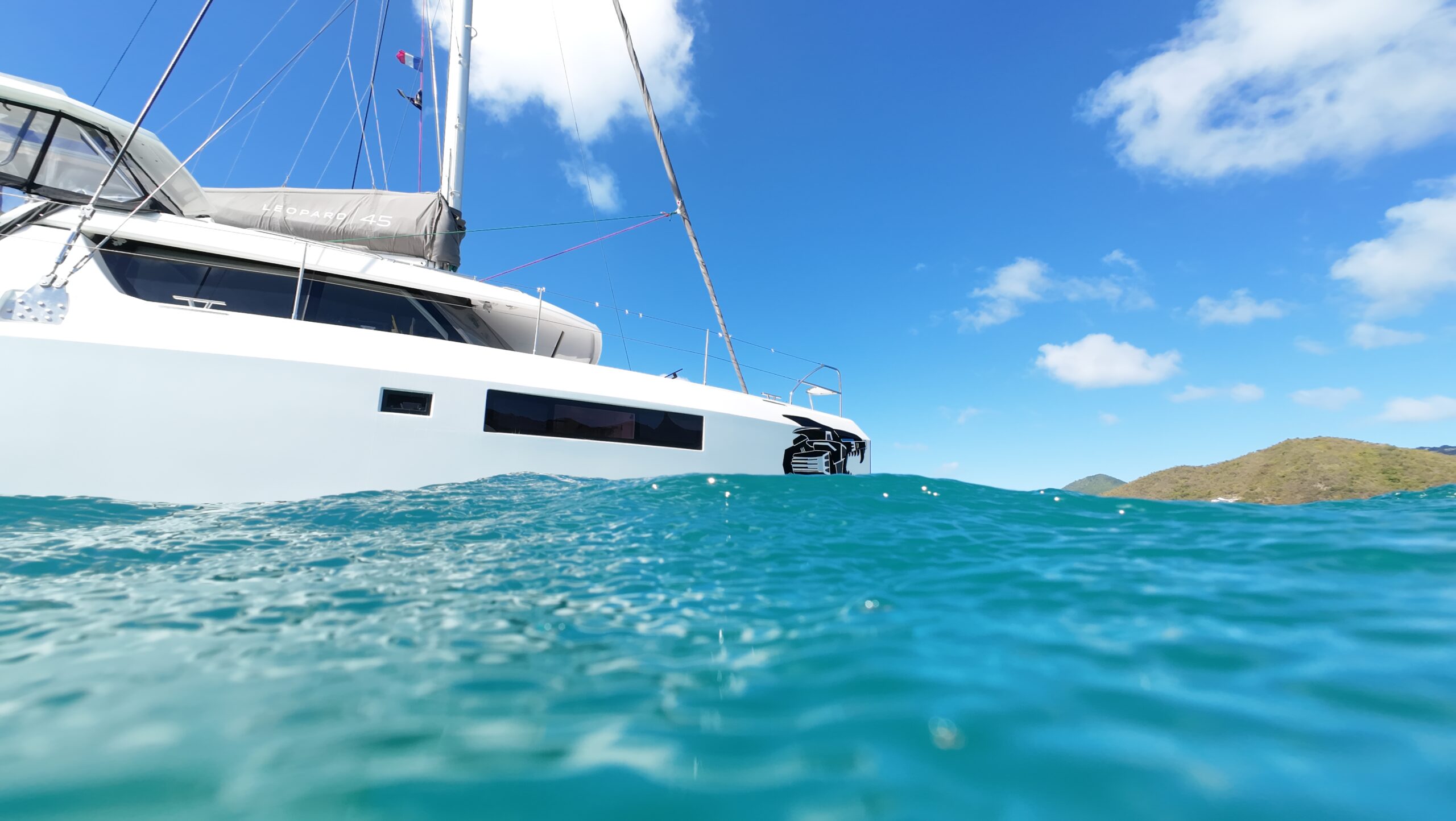
A misdirection in thinking that many new cruisers take is assuming they have to completely abandon their normal diet the moment they step off the dock. After the years I’ve spent aboard, I can tell you that’s simply not true.
Cooking on a boat vs cooking at home is both similar, and very different. Mostly, it comes down to spatial awareness, power management, and learning the art of provisioning, because while the ocean forces you to adapt your techniques and way of thinking, it doesn’t change what you like to eat.
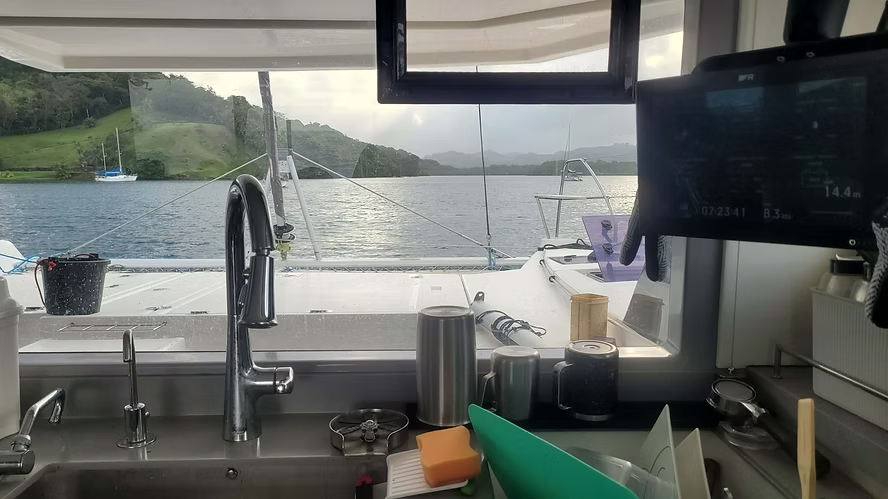
Don’t overhaul your diet, adapt it
Adapting your current diet is the secret to maintaining crew morale when it comes to meal time. I’ve found it’s incredibly common for new sailors to think they need to overhaul their diet, loading their boats with hardcore survival rations, strange canned meats they would never touch on land and so much rice that you’re starting to look like a warehouse, forgetting about the meals and treats that bring joy.
If you eat pasta twice a week at home, just ensure you have the water and the dry goods to keep eating pasta twice a week at sea. If you love fresh salads, you simply have to learn how to store delicate greens properly to extend their lifespan. Don’t abandon the meals that bring you comfort just because the kitchen is floating. For me, there’s always a healthy stock of ingredients to make Japanese ramen, as well as a few jars of Vegemite.
The goal is to figure out how to safely and cost effectively execute your favorite recipes while the floor moves beneath you.
Some simple things to keep in mind when provisioning:
1. Buy the things you like to eat and drink in bulk wherever it’s most cost-effective – this is a core part of managing the cost of provisioning a yacht
2. If you try something new and like it, STOCK UP! As you move between countries you may not see that brand or ingredient again…
3. Be prepared to experiment and substitute ingredients; you won’t always be able to fulfill your boat provisioning list exactly as intended, so knowing what you can use instead is invaluable
4. Meals for passage are different to meals at anchor, requiring more planning and thought about the upcoming sailing journey
5. Out on the water you can’t just pop to the grocery stores to buy more food, so being organised with your sailing food provisions is key
The reality of safety gear and rough seas
One of the biggest differences with cooking in a sailboat galley versus a house, is motion. When seas are rough it slows everything down, and your meal planning and cooking becomes more about what’s safe to do than anything else.
Prepping your galley for rough weather and rolling seas is part of life. I got lazy about this one time; my reward was watching the airfryer I hadn’t tied down launch itself from one side of the saloon to the other… On the bright side, I can speak to the durability of Instant Pot multicookers!
Safety gear like heavy-duty potholders, galley straps, and non-slip mats quickly replace the casual freedom you expect without thinking in a stationary kitchen.
- Galley straps: A simple strap over any stairs near your galley, to take away that hazard, or at the entrance to the galley that gives your lower back something to lean on rather than falling over
- Rope tethers and straps: To tie down appliances so they don’t move in rough seas
- Silicone grips: Silicone grips and potholders make moving hot pans around much safer
- Silicone mats: Non-skid silicone mats on the bench tops help stop chopping boards, bowls and plates from sliding around
Thinking bigger, there’s the gimbal stove. Monohull sailors tend to appreciate gimbaled stoves that keep pots level during heavy heels. Catamarans sail relatively flat, so our stove is stationary. That said, I still hook pots on with a tether while cooking and never leave them unattended while sailing.
Embracing high-efficiency appliances
When you cook at home energy consumption is an afterthought, if you even think of it at all, because you have unlimited mains electricity or gas. That’s not the case on a boat.
Aboard SV Liger we rely on a mixture of gas and electric appliances, giving us redundancy aboard.
Electrical appliances
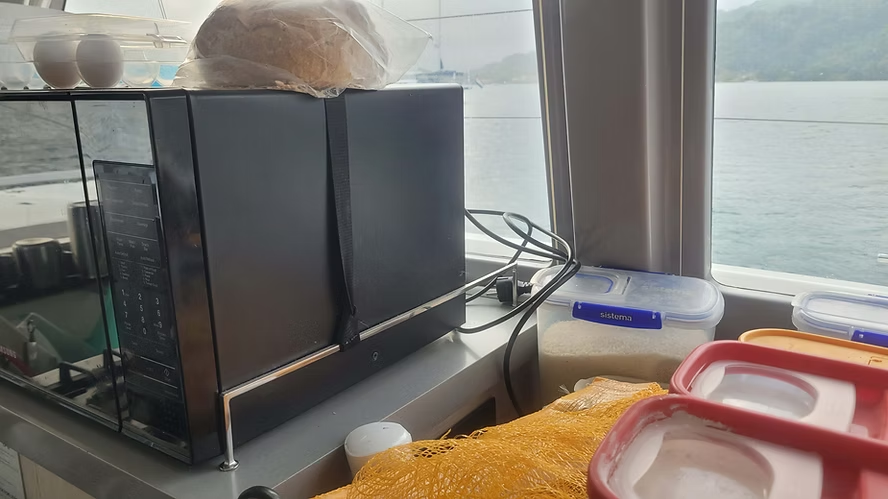
When shopping for new appliances we look for high-efficiency items, and tend to run them during peak solar hours, straight off the solar panels. In my galley I have:
- Microwave
- Stick blender
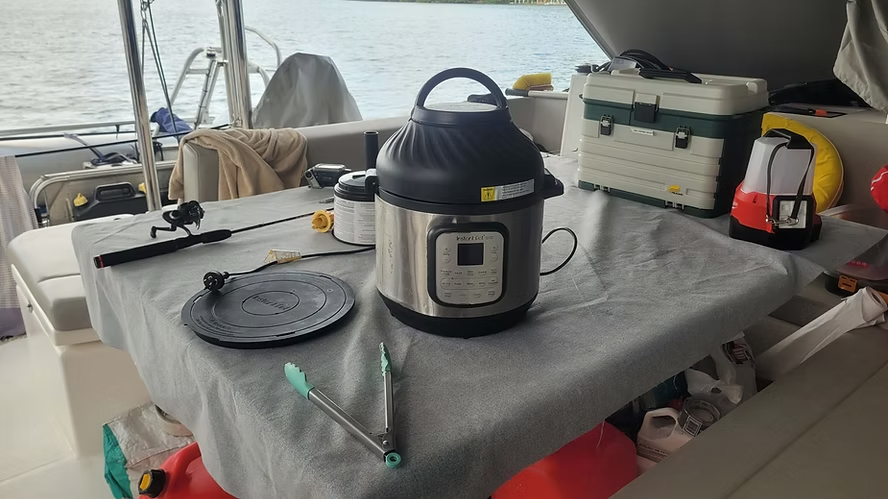
- Instant Pot (Air fryer / Pressure cooker / Slow cooker all-in-one)
- Coffee machine
- Ice machine (this will probably go soon)
- Juicer
Of those, it’s the coffee machine that’s used daily, the microwave is invaluable on passage and the air-fryer allows me to cook a tasty lunch outside, keeping the saloon cool while also taking full advantage of sun power. I also love the blender for making smoothies, marinades, cakes and sauces.
Gas cooking
Our oven, stove and BBQ all run off gas, and while more and more cruisers are moving towards all electric cooking, we won’t.
- As the chef aboard, I prefer using gas. I’ve had induction in the house before and hated it, so while cruising, I want to stick with what I like.
- Our power is not unlimited, and using electricity for all cooking would increase our consumption, meaning using more diesel to run the generator more often.
- Living aboard a boat you always want back-ups in case a system goes down or resource runs out, and having two ways of cooking provides that to me in the galley.
One thing that can be a challenge is refilling the LPG gas bottles, especially when you’re international cruisers like us. We have two propane gas bottles aboard and need to refill them every few months. It’s generally pretty easy in built-up areas or boat yards, but having different fittings can be a pain. We have a GasBOAT kit aboard, filled with gas bottle adapters, and use noforeignland to find gas bottle refill points recommended by other sailors. In places where refills aren’t allowed we switch to electric, or just get a local gas bottle for the time we’re there.
Dealing with limited counter space
A normal kitchen gives you sprawling bench tops to stage ingredients and appliances; a sailboat gives you about 2-3 square feet of usable counter and your pantry is usually in the floor and under a seat.
For me, a cluttered bench top drives me crazy, but I’ve had to accept that it’s just the way it is. Dishes have to be done as we go and things are organised by where it’s safe to keep them, because even a rough wake in an anchorage can send the galley sideways.
Water conservation changes everything
Mains-water plumbing makes us incredibly lazy when it comes to cleaning dishes, and honestly, I do miss the dishwasher. Cooking on a boat means rationing your fresh water for washing up, which is entirely different from just letting the tap run at home.
Aboard our boat we initially wash our oily plates and pans using salt-water pumped directly from the ocean – we used to do it on the sugar scoop but eventually installed a salt-water tap in the galley instead. We then give them a rinse using fresh water, which is usually cold – hot water is reserved for showers first and uses a lot of power to warm up.
Provisioning and cooking on a sailboat
Making the transition from house kitchen to yacht galley is a learning curve. As you navigate the change my advice is don’t throw away your favorite recipes, just learn how to prepare them in a way that’s safe, and suited to the environment and provisions available aboard.
FAQ
How do you provision a sailboat for long term travel?
Sailboat provisioning takes time and thought to get right, so for more specific advice on the different things to think about, check out our blog on this exact topic.
What can you cook on a boat?
The list of meals you can make in a boat galley is unlimited, so really it’s up to what ingredients are available, the cooking equipment the galley has, the weather conditions outside and your imagination. For suggestions, check out our recipe and meal ideas.
One of the creators behind Travel Sketch, Telicia lives full-time aboard SV Liger. She’s a freelance writer who’s worked with a range of international companies, and serves as social media coordinator and magazine editor for noforeignland. With the Med and Caribbean done, she’s charting a course through the Pacific and Asia.

Leave a Reply